What I learned in Modules 1-4

Niccolo Perez
ASEANST MIDTERMS OLL01
MODULE 1 : PRE-ASEAN SOUTHEAST ASIA
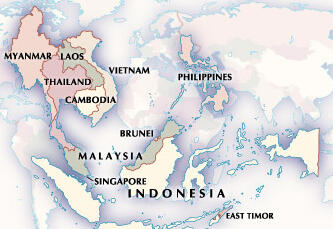
Before the present ASEAN, the ASEAN had to go through phases in its history that built itself up to its present point. These are the; SEAFET (Southeast Asia Friendship and Economic Treaty), ASA (Association of Southeast Asia), MAPHILINDO (Greater Malayan Confederation), Then the present ASEAN (Association of Southeast Asian Nations).
The SEAFET was started in 1959. SEAFET’s members are Malaysia and the Philippines. The purpose of SEAFET was for agreements on trade, economy, and education. The SEAFET failed because of disagreements from other Southeast Asian countries.
The ASA was formed in 1961. ASA’s members are Malaysia, Thailand, and the Philippines. The purpose of this next phase was peace and regional stability, economic cooperation in economy, social sciences and culture, and training facility research for the benefit of the member states. ASA fell because of the withdrawal of the Philippines from the association. This happened because of a territorial dispute with Malaysia over Sabah.
MAPHILINDO was formed after the failure of the ASA. The MAPHILINDO’s members are Malaysia, Philippines, and Indonesia. MAPHILINDO was formed to create cooperation in economy, culture and social science, and to end dispute between the member states.
The Bangkok Declaration is the main spark that started the whole present ASEAN. After MAPHILINDO failed, the SEA members tried again to have peace among them which led to a conference in Bangkok in 1967. After this conference, the Declaration of Bangkok in August 1967 was made. The declaration established the Association of Southeast Asian Nations or ASEAN.
The present ASEAN’s members are Indonesia, Malaysia, Philippines, Singapore, and Thailand. The purpose of the present ASEAN is to have cooperation in the political security, economy, social, and culture of all the member states. The ASEAN was organized in 1967 to primarily manage and contain the increasing external and internal conflicts and threats to the region after World War 2 and during the Cold War. ASEAN wanted to be a zone of peace, freedom, and neutrality (ZOPFAN) against the United States and the before named Soviet Union.

MODULE 2 : ASEAN PRINCIPLES
The Principle of Non-Interference basically means that the ASEAN member states are not to interfere with other country’s domestic issues. But this is changed to a looser version but is still guided by the Non-Interference principle called flexible engagement.
The ASEAN way is found to have some norms like having to find agreement and harmony, having sensitivity, politeness, non-confrontation and agreeability, the principle of quiet, private and elitist diplomacy versus public washing of dirty linen, and the principle of being non-Cartesian, non-legalistic. The ASEAN way used more indirect means of communication and confrontation, and also involved larger international community. The ASEAN does not use any force or military involved actions in communicating to other countries and in making moves or tactics when it concerns issues and problems. ASEAN uses the non-confrontational style through direct and indirect measure of restraint, pressure, and communication.
ASEAN centrality is having the ASEAN as the center for security, trade, and connectivity. ASEAN centrality is simply a name for having the ASEAN as the center for all the networks, may it be Southeast Asian or East Asian, the ASEAN will be like a leader and be the common ground of all the networks that it is connected to.
The ASEAN X is the practice of the ASEAN in decision-making. It is a slow process that often produces good decisions supported by intensive dialogue. During this process, of consultation with other member states, consensus is built up between all the member states. This process requires the willingness of the member states to compromise their own national interests for the sake of the larger region. This process is also necessary to address the differences that exist across the member states of the ASEAN.
MODULE 3 : ASEAN BODIES
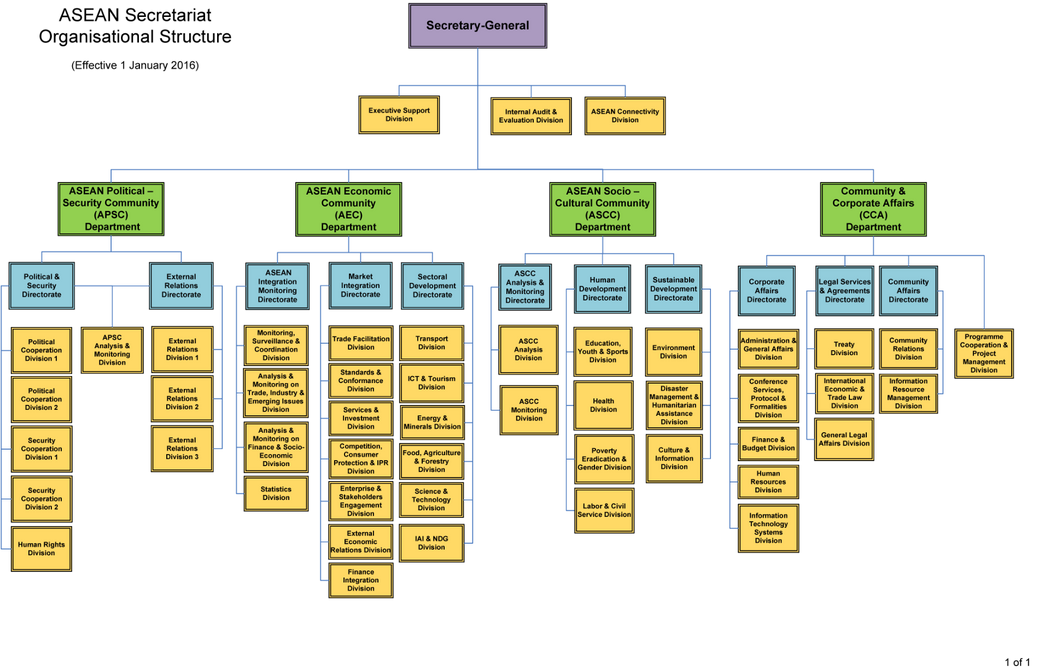
The four ASEAN bodies are the ASEAN summit, ASEAN Coordination Council, ASEAN Community Councils, and the ASEAN Sectoral Ministerial Bodies.
The commonalities between these four bodies are that they are decision-making bodies, they are policy-making bodies, and they are mandated by the ASEAN Charter.
The differences of these ASEAN bodies are they members and their functions.
The first body is the ASEAN Summit and is the head of the ASEAN. The ASEAN Summit is the highest body and the supreme policy making body of the ASEAN. It comprises of the heads of states of the member states.
The second body is the ASEAN Coordination Council and is the 2nd highest body in the ASEAN. This body is tasked to arrange ASEAN summit meetings and is comprised of the foreign ministers.
The third body is the ASEAN Community Council, and it consists of 3 other bodies, the ASEAN Political Security Council or APSCC, the ASEAN Economic Community Council or the AECC, and the ASEAN Socio-Cultural Community Council or the ASCCC. These three bodies work together and report to the ASEAN Community Council.
The fourth body is the ASEAN Sectoral Ministerial Bodies or ASMB and their job is to make their sectors better and implement decisions from the ASEAN summit. Each of the Community Councils have their own sectoral ministerial bodies.
The ASEAN Coordination Council and the ASEAN Community Council work together and report to the ASEAN Summit.
There are two other parts of the ASEAN structure namely the Committee of permanent Representatives and the ASEAN Committees in Third Countries and International Organizations.
The Committee of permanent Representatives or CPR is when representatives from each member country come together to meet and talk about their own issues. The tasks of the CPR is to monitor and implement decisions, coordinate issues, strengthen relations with external partners, and provide direction and support to the ASEAN secretariat.
The CPR’s structure is they have a Committee Chair, permanent representatives from each of the member states as members, and a working group that comprises the Deputy and other officials from the 10 permanent mission’s member states.
The ASEAN Committees in Third Countries and International Organizations or ACTC has 3 tasks, to promote ASEAN’s interest and identity in the host countries, provide inputs in drafting ASEAN documents, and bring urgent issues and make relevant recommendations with the host country or international organization.
The ACTC’s structure is that it is composed of Heads of Diplomatic Mission of the member states in host countries or international organizations, and they have a Chair and Vice-Chair.
MODULE 4 : ASEAN INTEGRATION